Dangerous Consequences of Not Refrigerating Cooked Poultry: Discard That Expensive Bird!
Cooked Chicken Safety: A Matter of Life and Health
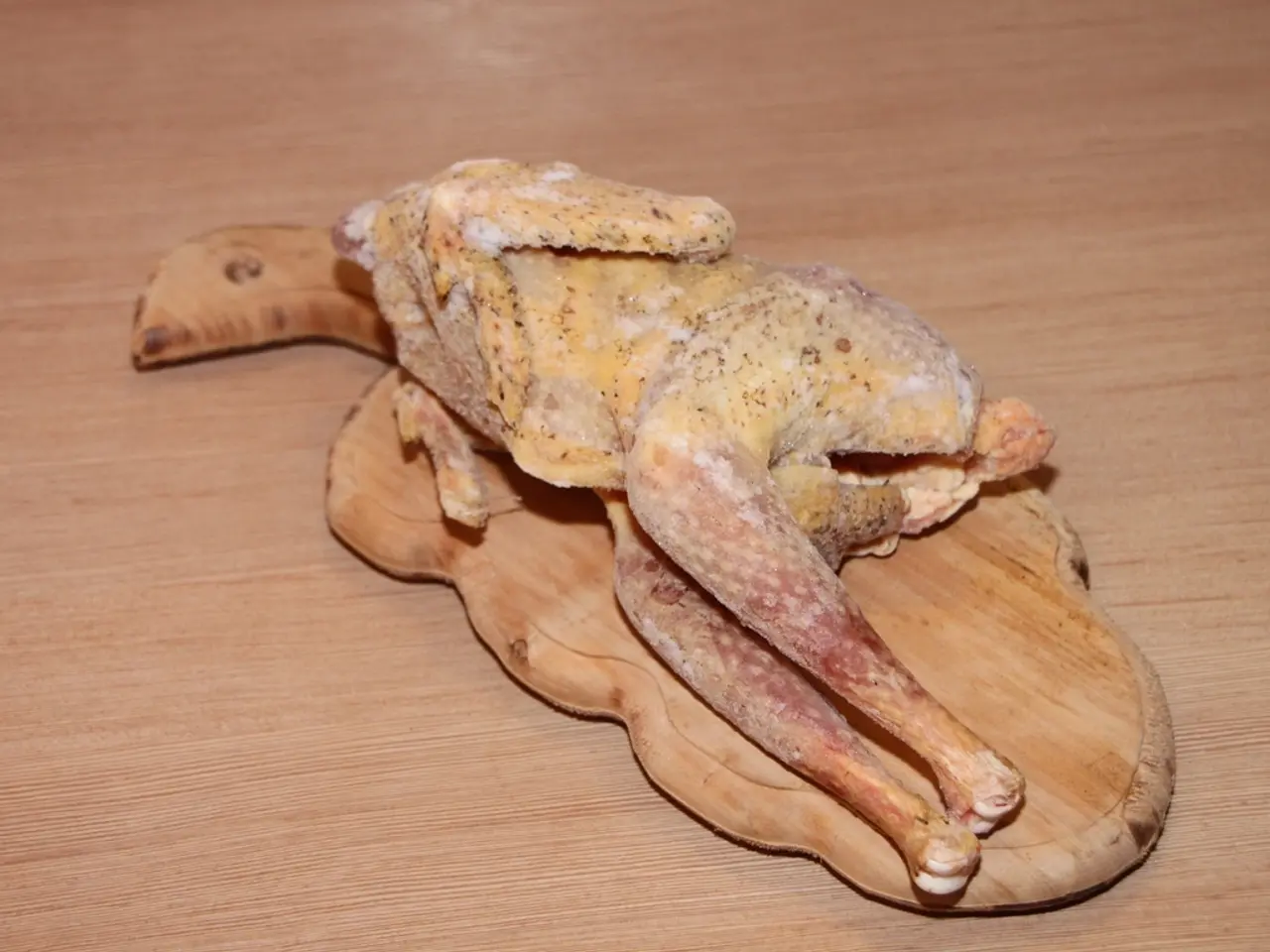
Eating cooked chicken that has been left out overnight poses a significant risk to one's health, a risk far greater than the $50 cost, according to a study by Scallan et al., (2011). This caution extends beyond everyday circumstances, with emergency preparedness materials emphasising the importance of shelf-stable and properly canned foods in disaster situations to avoid the dilemma of consuming unsafe food (UGA Extension, 2013).
The concern lies in the heat-resistant bacteria that can be found in cooked chicken, such as Clostridium perfringens and Listeria monocytogenes. These bacteria can survive some cooking and reheating processes, or grow if food is improperly cooled or held at unsafe temperatures after cooking.
Clostridium perfringens, associated with cooked meats like chicken, can form spores that survive cooking, then multiply rapidly when cooked food is left at unsafe temperatures for a prolonged time. This bacteria is a common cause of foodborne illness and is often found in reheated large meat portions or buffet food (1).
Listeria monocytogenes, on the other hand, is heat-tolerant to some extent and can survive refrigeration temperatures after cooking. It can cause listeriosis, a serious infection particularly dangerous to vulnerable populations. It may persist in cooked processed meats or sliced cooked chicken if contamination occurs after cooking or if the chicken is improperly stored (1).
While Salmonella and Campylobacter are the most common causes of food poisoning linked to raw poultry, they are typically killed by thorough cooking. However, they can cause illness if poultry is undercooked or if cross-contamination occurs post-cooking. Residual contamination or improper reheating might allow these bacteria to cause illness, but they are less likely to be heat-resistant enough to survive proper cooking and reheating processes (1, 2, 3).
In normal circumstances, food safety is about preserving life, not just wallet, as highlighted by Scallan et al., (2011). The Centers for Disease Control and Prevention (CDC) reports that each year, about 48 million Americans suffer foodborne illnesses, with 128,000 hospitalizations and 3,000 deaths (CDC, 2021).
In extreme survival scenarios, such as war-torn regions or refugee camps, the immediate threat of death from hunger often outweighs the potential later risk of foodborne illness (Time Magazine, 2025; ScienceDirect). Survival guides for extreme conditions advise caution but also recognise the harsh reality: when starving, people may attempt to consume food that is less than ideal to avoid immediate death (Reddit survival guide, 2022). In such scenarios, people may carefully manage intake and spacing of unsafe food to minimise harm if possible (Reddit survival guide, 2022).
In conclusion, while proper cooking, rapid cooling, and thorough reheating are essential to minimising risks of heat-resistant bacteria causing foodborne illness, the context of survival scenarios may require a different approach. It is crucial to prioritise health and safety in all circumstances while being mindful of the unique challenges posed by extreme situations.
References:
- Scallan, E. K., Hoekstra, R. M., Angulo, F. J., Tauxe, R. V., Widdowson, M. A., & Schuchat, A. (2011). Foodborne illness acquired in the United States—major pathogens. Emerging Infectious Diseases, 17(12), 2136–2142. [doi:10.3201/eid1712.110829]
- UGA Extension. (2013). Food Safety in Emergencies. [online] Available at: https://extension.uga.edu/publications/detail.html?number=C876
- Time Magazine. (2025). The Hidden Dangers of Eating Leftovers. [online] Available at: https://time.com/5913024/leftovers-food-safety/
- ScienceDirect. (2025). Foodborne Pathogens and Their Impact on Public Health. [online] Available at: https://www.sciencedirect.com/topics/medicine-and-dentistry/foodborne-pathogens
- CDC. (2021). Foodborne Diseases: Making People Sick. [online] Available at: https://www.cdc.gov/foodsafety/foodborne-germs.html
- Reddit Survival Guide. (2022). Food Safety. [online] Available at: https://www.reddit.com/r/survival/wiki/faq/foodsafety
- In the face of unsafe cooked chicken, the risk to one's health is far more severe than the cost, as shown in a 2011 study by Scallan et al.
- Proper storage and reheating of cooked chicken is crucial to prevent the survival of heat-resistant bacteria like Clostridium perfringens and Listeria monocytogenes.
- A healthy lifestyle that includes nutritious food and cooking, such as healthy-cooking techniques, can help manage medical-conditions and chronic-diseases like foodborne illnesses.
- Cooking with CBD-infused ingredients could potentially offer therapeuties-and-treatments for various health-and-wellness issues, but more research is needed to confirm its safety and efficacy.
- In extreme survival scenarios, the focus is often on immediate hunger survival, as opposed to the long-term risk of foodborne illness, as highlighted in the Reddit Survival Guide (2022).
- Integrating fitness-and-exercise and a balanced nutrition regimen into one's lifestyle can bolster the immune system, thus minimizing the risk of medical-conditions and chronic-diseases.
- As emerging research continues to explore the connection between food safety and health, it is important to consider lifestyle factors like food-and-drink choices, cooking practices, and nutrition for overall wellbeing and disease prevention.