
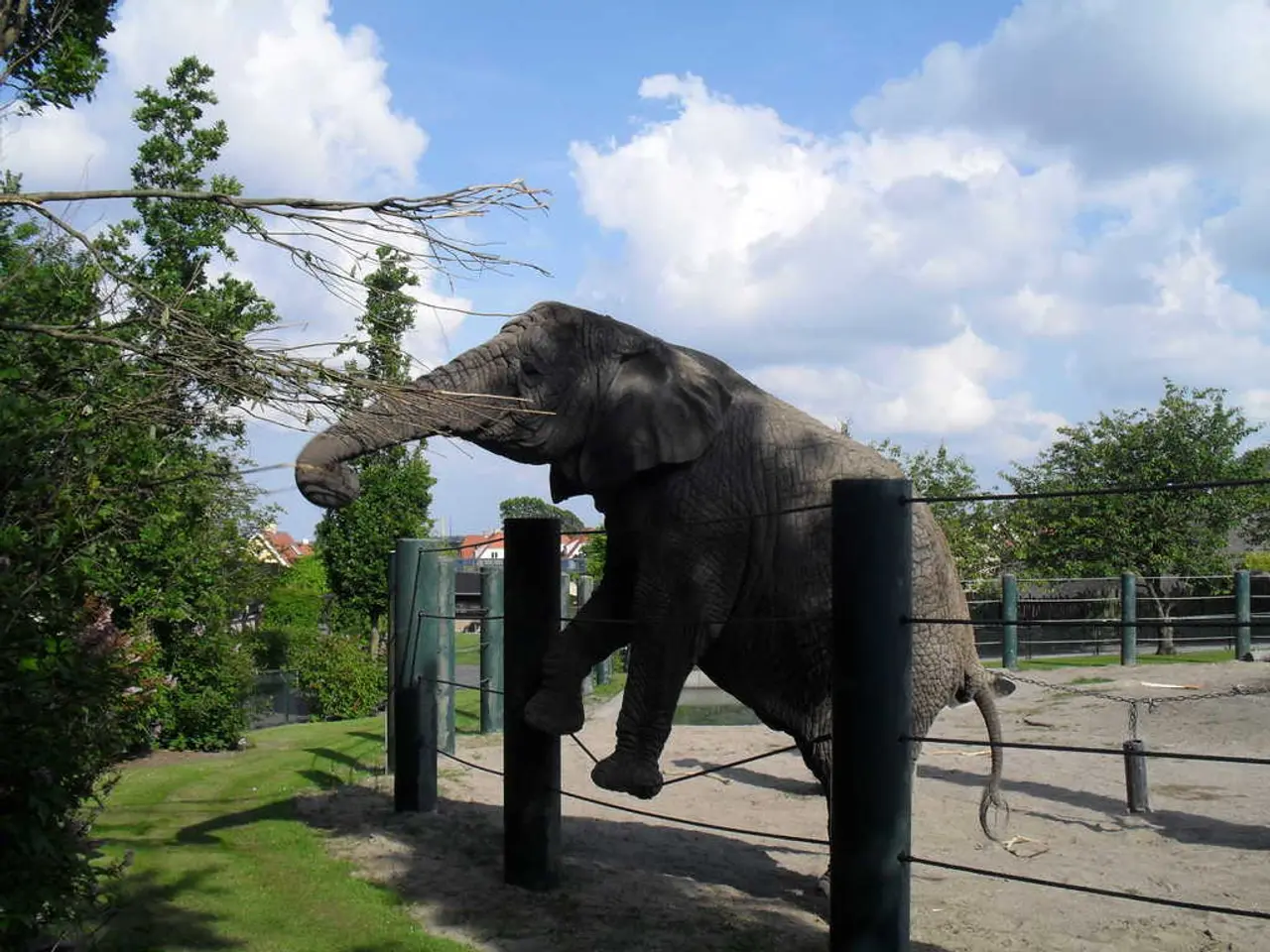
Elephants from Africa have been dwindling primarily due to hunting for their ivory.
The International Union for Conservation of Nature (IUCN) has released a new assessment that paints a dire picture for African elephant populations. Over the past three generations, the numbers of both the savanna and forest elephants have seen dramatic declines, tipping them into the endangered and critically endangered categories, respectively.
The savanna elephant, known for its larger size and curving tusks, has seen a decline of more than 50% over 75 years, making it endangered. On the other hand, the forest elephant, smaller with straight tusks, has experienced an even more severe decline of over 80% over 93 years, pushing it to the brink of extinction and earning the status of critically endangered.
Between 2007 and 2014, savanna elephant populations declined by 30% in 18 African countries. Similarly, between 2002 and 2011, forest elephant populations plummeted by 62% in less than a decade. Poaching and habitat loss have been identified as the primary drivers of this decline.
The IUCN relies on factors such as the dwindling of numbers and range to determine an animal's conservation status. If given the chance, elephants can bounce back, according to Iain Douglas-Hamilton, founder of Save the Elephants. However, the long-term trends for Africa as a whole are poor, as per Scott Schlossberg, a data analyst at Elephants Without Borders.
The need for renewed attention to stop the killing, trafficking, and demand for ivory is highlighted in the new assessment. The U.S., China, U.K. and many other countries have closed their legal domestic ivory markets, but Japan now has the world's largest legal ivory market, with Japanese carvers preferring ivory from forest elephants.
Evidence has been building since the early 2000s that forest and savanna elephants should be split taxonomically into two species. Splitting them into separate species could have a significant positive impact on their conservation, according to the World Wildlife Fund.
The range of the savanna elephant includes sub-Saharan Africa, while the range of the forest elephant is in the equatorial forests of Central and West Africa. Rebuilding elephant populations requires protecting their habitat and continuing to clamp down on poaching and ivory trafficking.
Kenya's Tsavo National Park provides an example of elephant population rebound, with numbers increasing from about 6,500 in 1988 to about 17,000 today, due to anti-poaching measures. The conservation status of these majestic creatures hangs in the balance, and it is crucial that efforts to protect them are stepped up to ensure their survival for future generations.
References: - Britannica. (2025). African forest elephant. https://www.britannica.com/animal/African-forest-elephant - Britannica. (2025). African savanna elephant. https://www.britannica.com/animal/African-savanna-elephant - Wikipedia Elephant article. (2025). https://en.wikipedia.org/wiki/Elephant - Schlossberg, S. (2021). Elephant population trends in Africa. Elephants Without Borders. https://elephantswithoutborders.org/elephant-population-trends-in-africa/ - Douglas-Hamilton, I. (2021). Can elephants bounce back? Save the Elephants. https://savetheelephants.org/can-elephants-bounce-back/
- The International Union for Conservation of Nature (IUCN) highlights the need for renewed attention to stop the killing and demand for ivory, particularly targeting Japan's large legal ivory market which often prefers ivory from forest elephants.
- Wildlife conservation efforts have demonstrated potential for success, with Kenya's Tsavo National Park seeing a rebound in elephant populations from about 6,500 in 1988 to around 17,000 today, thanks to anti-poaching measures.
- Evidence suggests that splitting African forest and savanna elephants into separate species could have a significant positive impact on their conservation, according to the World Wildlife Fund.
- Photography enthusiasts and nature lovers alike can contribute to the conservation of these majestic creatures by supporting organizations such as Save the Elephants and Elephants Without Borders, which work tirelessly in wildlife conservation, habitat protection, and anti-poaching initiatives.
- The survival of African elephants for future generations relies on continued efforts in health-and-wellness, science, and medical-condition research, as well as addressing the factors contributing to their dramatic declines, such as poaching and habitat loss.