
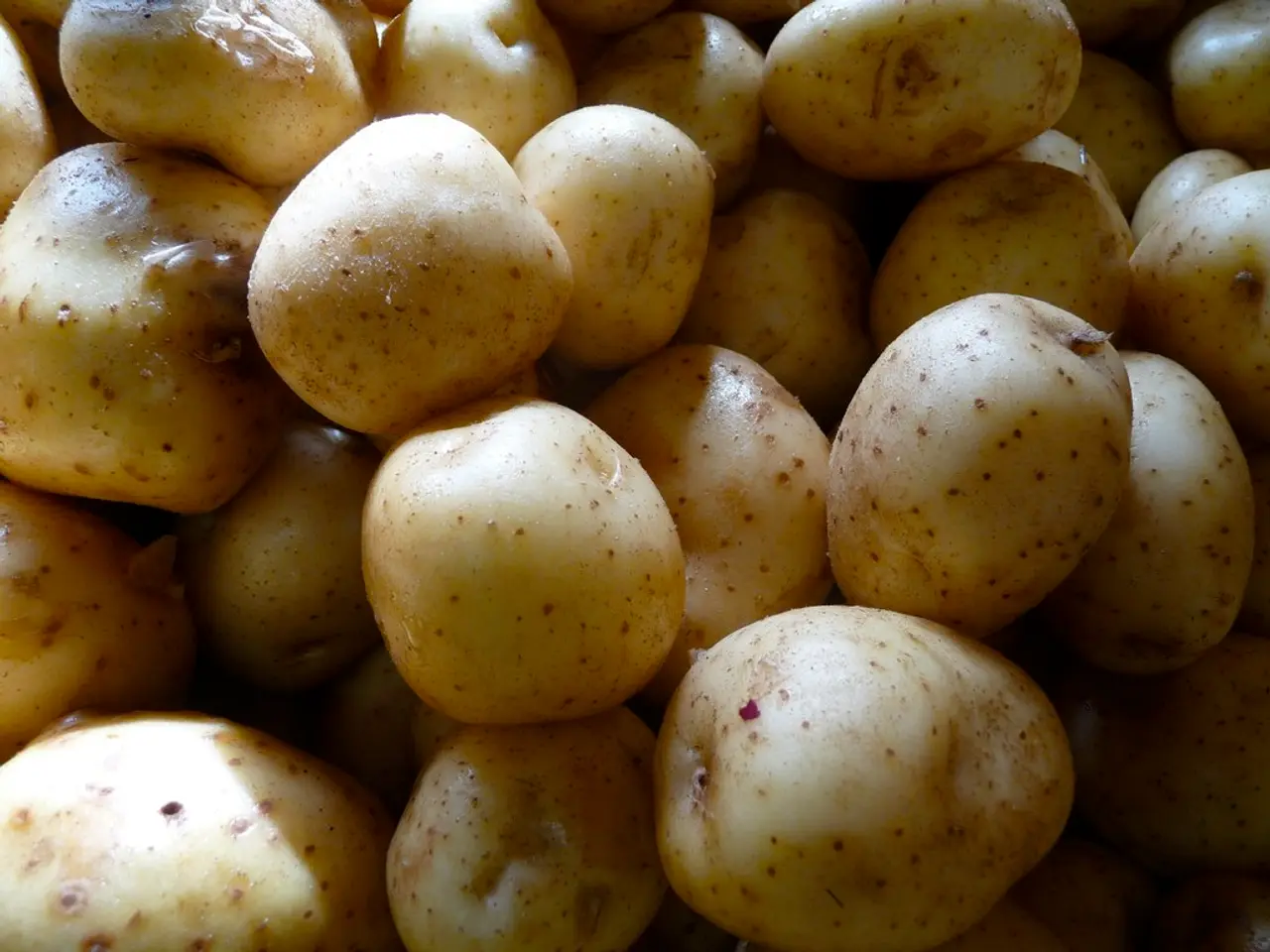
Exploring the Multiple Uses, Advantages, Potential Drawbacks, and Additional Facts About Potato Starch
Potato starch and potato flour, two versatile ingredients derived from potatoes, serve distinct purposes in cooking and nutrition.
Potato starch is a purified carbohydrate, primarily composed of starch with minimal protein, fat, or fiber. On the other hand, potato flour is made from whole dried potatoes, including the potato's flesh and skin, resulting in a flour with a potato flavour and more nutrients like protein and fiber.
In the kitchen, potato starch shines as a thickener for sauces and soups, and for improving texture in baked goods by creating a light, tender crumb or creamy consistency. It forms a smooth slurry when mixed with water and heats to thicken without adding potato flavor. In contrast, potato flour provides moisture, a strong potato flavor, and a denser texture, making it suitable for gluten-free baking recipes where a pronounced potato taste is desired or in bread blends to increase moisture.
Potato starch is a preferred choice in manufacturing and specialized uses due to its high digestibility and neutral taste compared to other starches. Meanwhile, potato flour's whole potato composition means it will impart more flavor and a denser texture than potato starch.
For those on a gluten-free diet, potato starch can serve as a suitable alternative for flour in baking recipes, but it's important to note that too much can make baked goods dry and crumbly.
Research suggests that resistant starch in potato starch may improve insulin sensitivity, potentially reducing the risk of developing obesity, diabetes, and heart disease. This type of starch passes through the small intestine undigested and ferments in the colon, feeding healthy bacteria and producing short-chain fatty acids. Furthermore, eating resistant starch may reduce the number of hormones that trigger hunger in people with excess weight.
However, it's worth noting that the effects of resistant starch on insulin sensitivity may vary between males and females. Additionally, some individuals may find that eating large quantities of potato starch triggers gas and bloating.
Potato starch is flavorless, making it a versatile ingredient in a variety of recipes, from thickening agents in soups, gravies, pie fillings, sauces, stews, and casseroles, to a coating for frying food, providing a golden and crispy outer layer during the frying process.
In the market, potato starch can be purchased at larger supermarkets, specialty health food stores, and several online retailers. It can be substituted with cornstarch, wheat flour, arrowroot powder, rice flour, or tapioca starch in recipes.
Further research is needed to determine the reasons for these differences and the full extent of the health benefits of resistant starch in potato starch. But for now, understanding the unique properties of potato starch and potato flour can help you make informed choices in your cooking and baking endeavors.
- Scientific findings indicate that the resistant starch in potato starch may predict potential health benefits, including improved insulin sensitivity, which could possibly lower the risk of obesity, diabetes, and heart disease by reducing hunger hormones.
- In the realm of health-and-wellness, cooking with potato starch could be a wise choice due to its resistant starch content and neutral flavor, making it suitable for various food-and-drink recipes without altering taste significantly.
- With its distinctive texture and nutritional advantages, potato flour could be an excellent addition to cooking lifestyle, particularly in gluten-free recipes, offering a strong potato flavor and richer nutrients such as protein and fiber.
- As potato starch is versatile and flavorless, it can be used as a predictive tool in the science of cooking, serving as a thickening agent across recipes, from soups and sauces to coatings for fried food, enhancing overall food-and-drink quality and consistency.




