
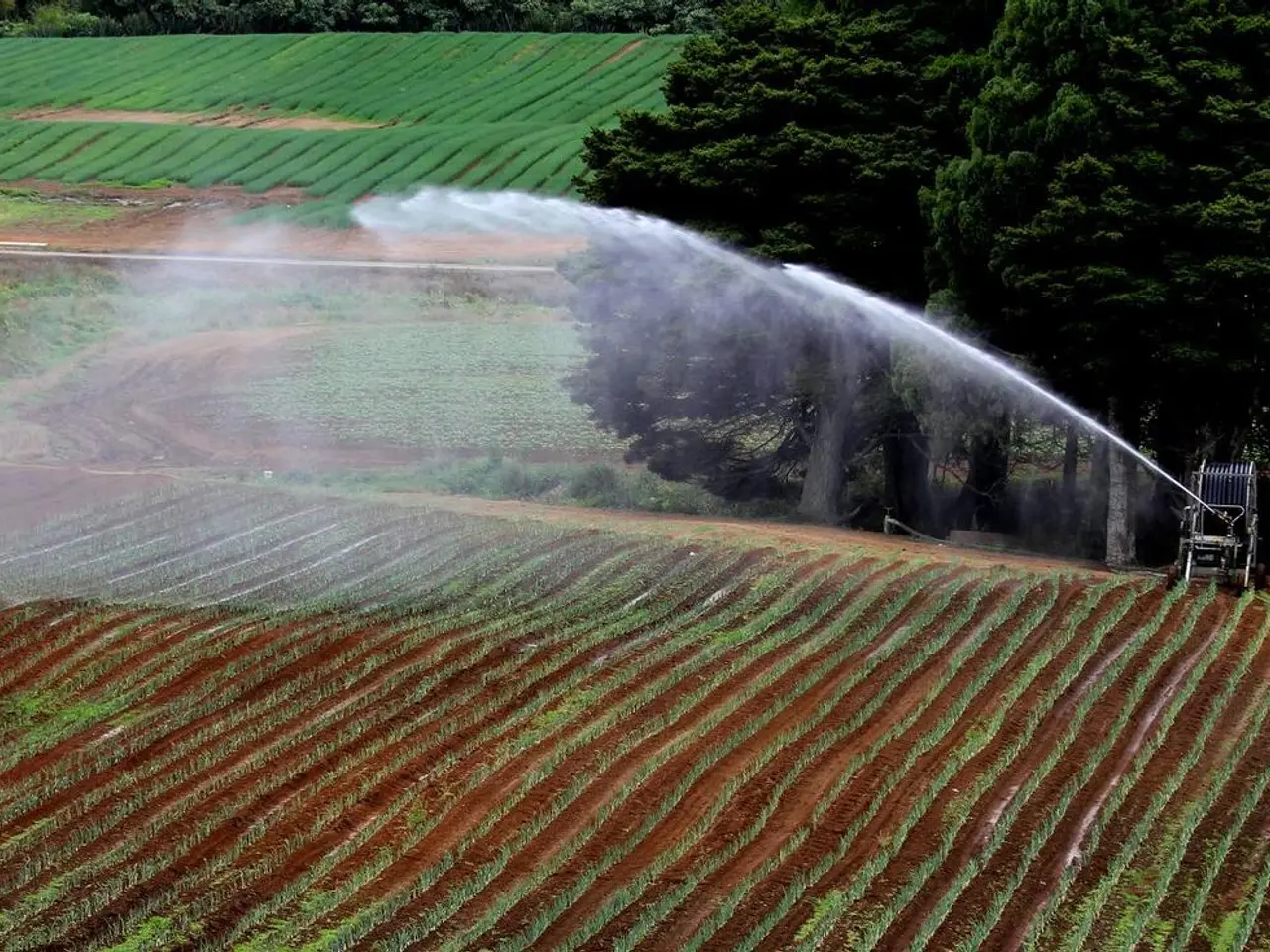
Global Food Security Requires Sustainable Farming of Grain Crops
In an effort to combat climate change and promote environmental health, sustainable grain production practices are gaining traction across the agricultural sector. These methods, including organic farming, regenerative agriculture, no-till and conservation tillage, crop rotation and diversification, sustainable sourcing of heritage grains, and vertical farming, offer significant benefits for the environment, farmers, and food security.
Organic Farming
Eliminating synthetic fertilizers and chemical pesticides, organic farming relies on natural processes such as composting, green manure crops, and crop rotation. This approach leads to healthier crops, improved soil health, reduced environmental contamination, and enhanced biodiversity, supporting sustainable food systems by promoting natural pest control and maintaining soil fertility.
Regenerative Agriculture
Focusing on rebuilding soil and ecosystem health through practices like holistic grazing, agroforestry, biochar application, and promoting microbial life, regenerative agriculture increases soil organic matter and nutrient cycling, sequesters carbon, enhances resilience to climate change, and improves long-term productivity. It sustains ecosystems which supports biodiversity and reduces carbon emissions.
No-till and Conservation Agriculture
Minimising soil disturbance by avoiding plowing, maintaining soil cover, and practicing crop rotation, no-till and conservation agriculture prevents soil erosion, enhances soil structure and fertility, conserves water, and reduces greenhouse gas emissions.
Crop Rotation and Diversification
Alternating crops improves soil nutrients and breaks pest and disease cycles, enhancing soil fertility, reducing the need for chemical inputs, supporting biodiversity, and strengthening farm resilience.
Sustainable Sourcing of Heritage and Ancient Grains
Using local, heritage grain varieties supports biodiversity and preserves cultural heritage. This approach reduces transportation emissions, supports local farmers, improves grain quality, increases genetic diversity, and better resilience to environmental stresses and pests.
Vertical Farming
Indoor, stacked growing systems using controlled environments and recirculating nutrient-rich water, vertical farming uses up to 90% less water, greatly reduces land use, minimises climate-related risks by indoor year-round growing, and achieves much higher yields per square foot. It also lowers transportation emissions by enabling local production in urban areas.
These methods, when combined, form an integrated approach to sustainable grain production that promotes environmental health, economic viability for farmers, and stable, nutritious food supplies.
The USDA conservation programs provide cost-share funding for sustainable practices, covering 50-90% of implementation costs. The 2023 Farm Bill allocated $19.5 billion for conservation programs supporting sustainable grain production practices. Fine-tuning nutrient management, precision agriculture technologies, and AI-powered systems are revolutionising sustainable grain production, making it more efficient and profitable.
Corporate sustainability commitments are driving demand for sustainably produced grains, with major food companies pledging to source 100% of their grains from sustainable operations by 2030. Most farmers see net positive returns within 3-4 years through reduced input costs and potential premium markets. If implemented on just 25% of global grain acreage, sustainable practices could offset 10-15% of annual agricultural greenhouse gas emissions.
Consumers can support sustainable grain production by choosing products with recognised certifications like USDA Organic, Regenerative Organic Certified, Leading Harvest, and Fair Trade. Purchasing locally produced grains reduces transportation emissions while supporting regional food systems. Local sourcing also builds relationships between consumers and producers, creating awareness of sustainable farming challenges and successes while supporting rural economic development.
Transitioning to sustainable grain production typically takes 3-5 years to see full benefits, though improvements begin immediately. Initial transition costs vary but typically range from $50 to $150 per acre, primarily for cover crop seeds, soil testing, and equipment modifications. Government policies increasingly support sustainable agriculture through expanded conservation programs, tax incentives, and research funding.
Examples of successful sustainable grain operations include the Heartland Grain Cooperative in Iowa, which sequesters 1.2 tons of carbon per acre annually and saw $2.3 million annual cost savings across the cooperative after transitioning to sustainable practices. The Prairie Heritage Farm in Minnesota reduced input costs by 55% while maintaining yields after transitioning to certified organic production.
In conclusion, sustainable grain production offers a promising path forward for a more environmentally friendly, resilient, and economically viable agricultural sector. By supporting sustainable practices, consumers, farmers, and policymakers can work together to create a healthier planet and a more secure food supply.
- Adopting organic farming techniques that eliminate synthetic fertilizers and chemical pesticides, while promoting natural pest control and maintaining soil fertility, leads to healthier crops and supports sustainable food systems.
- Regenerative agriculture, focusing on rebuilding soil and ecosystem health, enhances soil organic matter, nutrient cycling, carbon sequestration, and improves ecosystem resilience, thereby supporting biodiversity and reducing carbon emissions.
- No-till and conservation agriculture, by minimizing soil disturbance, preventing soil erosion, and conserving water, offers significant benefits for soil health, water conservation, and reduced greenhouse gas emissions.
- Crop rotation and diversification improve soil nutrients, reduce the need for chemical inputs, support biodiversity, and strengthen farm resilience, making food systems more sustainable.
- Sustainable sourcing of heritage grains, involving local production and consumption of natural grain varieties, reduces transportation emissions, supports local farmers, and enhances grain quality while preserving cultural heritage.
- Vertical farming offers a solution to combat climate change by using less water, reducing land use, and achieving higher yields per square foot, thus lowering transportation emissions and contributing to environmental sustainability and health-and-wellness.