
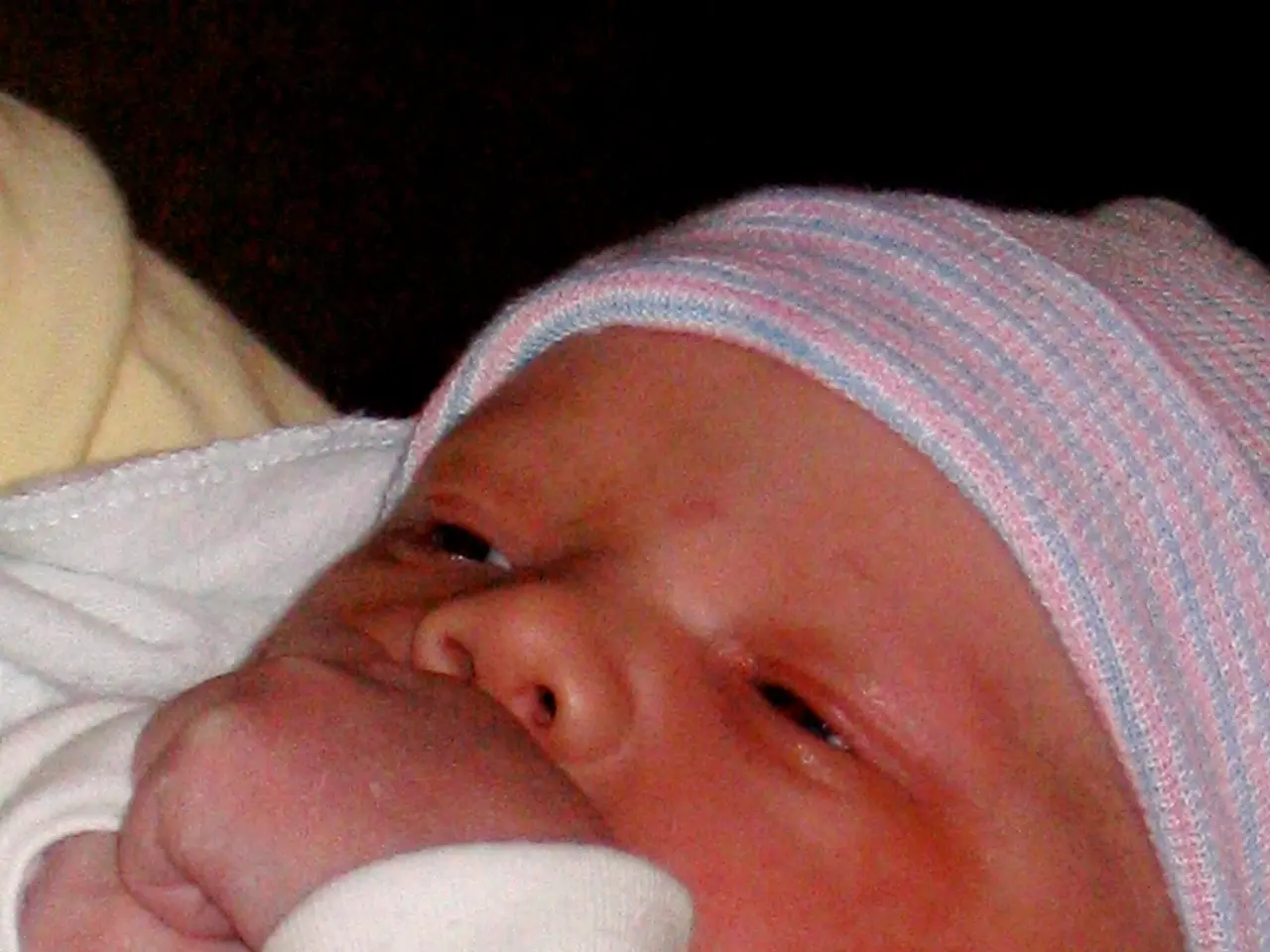
Infant Lip Sores: Origin and Time for Medical Attention
Newborn Lip Blisters: A Guide for Parents
Newborns may occasionally develop blisters on their lips, causing concern for parents. It's essential to understand the different types of lip blisters in newborns and how to manage them appropriately.
The most common type of lip blister in newborns is suck blisters, also known as friction blisters or suck callouses. These blisters occur due to continuous friction or sucking on the lips, particularly common in breastfed babies. Suck blisters appear as small, fluid-filled bubbles or sometimes a larger band stretched across the lips. They are usually clear but can rarely contain pus. Although these blisters are not harmful, they may indicate issues with breastfeeding latch technique.
Another type of lip blister in newborns is cold sores, caused by the herpes simplex virus (HSV-1). Cold sores typically appear as clusters of smaller blisters that break open and cause painful sores, oozing a clear liquid and crusting over. Cold sores may be serious in newborns, and prompt treatment with antiviral medication is necessary to reduce the risk of severe disease. Cold sores can occur on the lip, around the mouth or eyes, and on other areas of the newborn's body.
Other potential blister or sore-like presentations on or near the lips may be related to infections like impetigo. Impetigo is a bacterial skin infection that mainly affects young children and causes itchy sores and blisters around the mouth and nose, which can be contagious to newborns.
Treatment and management depend on the type of blister:
- Suck blisters often resolve on their own without specific treatment. Ensuring proper breastfeeding latch and technique can prevent recurrence. Maintaining hygiene by washing hands, bottles, and pacifiers helps prevent infection. No harsh treatments are typically needed.
- Cold sores require careful hygiene to avoid spreading the virus. Antiviral topical creams or oral medications may be prescribed by a doctor if necessary. Avoiding direct contact kissing on the affected area is important for prevention.
- If a blister is suspected to be from infection like impetigo, prompt medical evaluation is needed for antibiotic treatment.
If you're bottle-feeding, ensuring your baby gets most of the bottle's nipple in their mouth and using the right size nipple can help prevent sucking blisters. A single fluid-filled bump on a newborn's upper lip is usually not a cause for concern.
However, if your newborn shows additional symptoms such as fever, fussiness, and feeding less, or if they develop a cluster of tiny, fluid-filled blisters on their lips, it's crucial to seek medical attention promptly.
[1] La Leche League International. (2021). Sucking Blisters. Retrieved from https://www.llli.org/breastfeeding-info/sucking-blisters/
[2] American Academy of Pediatrics. (2021). Cold Sores in Infants and Children. Retrieved from https://www.healthychildren.org/English/health-issues/conditions/infections/Pages/Cold-Sores-in-Infants-and-Children.aspx
[3] Mayo Clinic. (2021). Sucking blisters in babies: Causes, treatment, and prevention. Retrieved from https://www.mayoclinic.org/healthy-lifestyle/infant-and-toddler-health/expert-answers/sucking-blisters-in-babies/faq-20058245
[4] National Institutes of Health. (2021). Cold Sores (Fever Blisters). Retrieved from https://medlineplus.gov/coldsores.html
[5] Centers for Disease Control and Prevention. (2021). Impetigo. Retrieved from https://www.cdc.gov/healthywater/hygiene/disease/impetigo.html
- "Parents may find news about health-and-wellness issues, such as skin-care concerns for newborns, particularly interesting, especially information related to common blisters like suck blisters or cold sores."
- "For updates on health matters, it's important to stay informed about symptoms and treatments for various conditions, such as skin infections like impetigo, which can affect newborns and may require medical attention."