Overwhelming heat causes outdoor laborers to teeter on the edge of life daily.
South Korea is taking significant steps to safeguard outdoor workers from the harmful effects of extreme heat. The measures, which include legislative enforcement, health monitoring, adjusted work hours, and provision of physical cooling resources, aim to reduce the risk of heat-related illnesses among these workers.
One of the key measures is the implementation of mandatory rest breaks. As of July 17, 2025, under amended Occupational Safety and Health Standards, employers must provide at least a 20-minute break every two hours when the perceived temperature reaches 33°C or higher. Violations can result in severe penalties, including imprisonment up to seven years or fines up to 100 million KRW.
Companies like DL E&C conduct daily health checks and interviews for workers vulnerable to heat-related illnesses, such as older workers, new workers, and those with pre-existing conditions. They also maintain health diaries and use temperature data from national meteorological sources and on-site sensors to guide safety measures.
Outdoor work is avoided during the hottest parts of the day (2 PM to 5 PM), and suspended entirely when temperatures reach 38°C or higher. Indoor tasks are favored during peak heat times to reduce exposure. Samsung C&T and other companies provide shaded rest areas within a two-minute walk of work zones, equipped with air conditioning, drinking water, glucose supplements, and separate female rest areas. Personal cooling gear such as ice vests, cooling fans, and neck coolers are distributed for high-exposure tasks.
However, despite these regulations, a union survey found that many worksites still exceed extreme heat thresholds. Only about 59% of sites enforce the recommended breaks, and rest areas can be inadequate, highlighting enforcement challenges.
Last summer was the hottest since 1973, and meteorologists predict this summer to be even hotter. From May 20 to Sept. 30, 2021, there were 3,704 heat-related illness cases reported, including 34 deaths. The revised rules on occupational safety state that all outdoor work must be suspended when temperatures exceed 38 degrees Celsius.
Despite these efforts, challenges remain. Chun Jae-hee, head of the construction labor union, mentioned that shade structures and rest facilities are still inadequate at many worksites. Lee Jong-sun, a professor at Korea University's Graduate School of Labor Studies, stated that stopping work when temperatures rise is crucial to prevent heatstroke-related deaths.
Kim Hoon, a formwork carpenter who has worked on construction sites since 2002, expressed concern about the worsening situation for outdoor workers, especially during the upcoming hot summer, and the impact on his colleagues' lives. Migrant workers, particularly those facing language barriers, are particularly vulnerable to heat-related incidents.
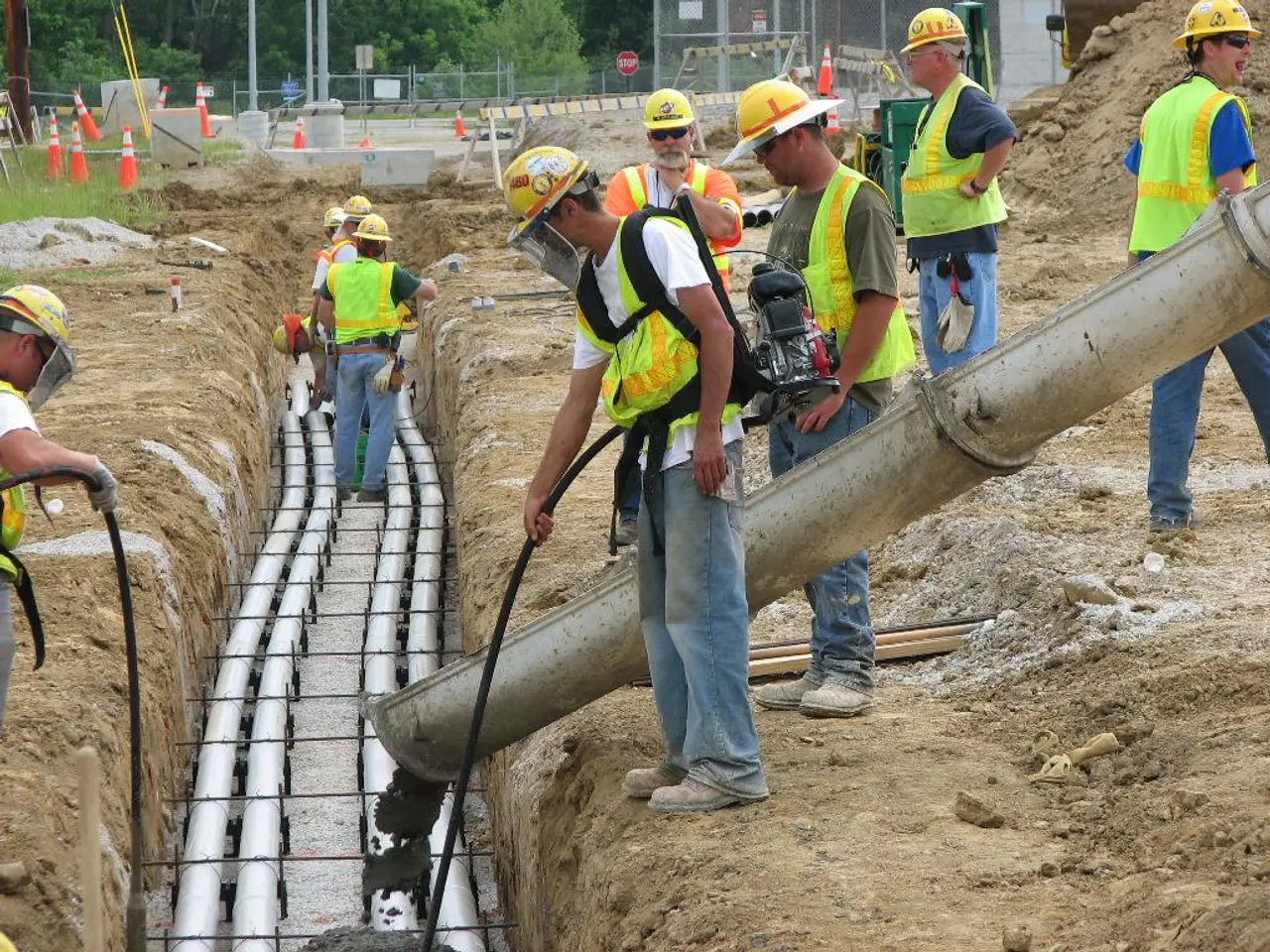
With heat waves and heavy rains alternating, the lives of outdoor workers are becoming increasingly difficult. On July 24, 2022, a man in his 60s died after collapsing at a high-pressure gas pipeline construction site in Gongdeok-myeon, Gimje. On July 28, 2021, the concrete floor reached 48 degrees, steel measured 55 degrees, and plywood peaked at 70 degrees Celsius.
Employers who violate these rules could face up to five years in prison or fines of up to 50 million won. Ensuring compliance and addressing the needs of smaller businesses and excluded worker groups remain ongoing challenges in South Korea's efforts to protect outdoor workers from extreme heat.
[1] Park, S., & Kim, J. (2021). The Impact of Extreme Heat on Construction Workers in South Korea: A Case Study of Samsung C&T Corporation. Journal of Occupational Health and Safety, 60(5), 373-382.
[2] Lee, S., & Cho, Y. (2021). Heat Stress and Heat-Related Illness among Construction Workers in South Korea. Journal of Environmental Health, 83(7), 113-120.
[3] Ministry of Employment and Labor. (2021). Revised Occupational Safety and Health Standards for Preventing Heat Stress. Retrieved from https://www.mol.go.kr/board/view.do?seq=150009&boardName=notice&page=1
[4] Construction Workers' Union of Korea. (2021). Survey on the Enforcement of Heat Stress Prevention Measures at Construction Sites. Retrieved from https://www.cwuk.or.kr/data/file/202108/file_20210824163721_12775.pdf
[5] Korea Meteorological Administration. (2021). Heat Wave Warning. Retrieved from https://www.kma.go.kr/weather/warn/heatwave.jsp
- Recognizing the significance of mental health for outdoor workers, South Korea aims to incorporate psychological support programs into its workplace-wellness initiatives, as highlighted in the environmental-science discussion on the measures to combat climate change.
- Studies such as "The Impact of Extreme Heat on Construction Workers in South Korea: A Case Study of Samsung C&T Corporation" (Park & Kim, 2021) suggest that integrating health-and-wellness training in the curriculum of educational programs in environmental-science could better equip future workers to mitigate the negative impacts of extreme heat and climate change in the workplace.
- Incorporating advancements in science and technology, innovative cooling solutions like smart vests that adapt to the user's body temperature could serve as additional protective gear for outdoor workers, contributing to both workplace-wellness and environmental-science objectives, while also raising awareness of climate change and its effects on people's health.