Pregnant shrimp consumption: Safety, advantages, and safety measures to consider
Pregnancy is a time when a mother's diet becomes crucial for the health of her baby. One food group that often raises questions is seafood. Here's a comprehensive guide to help pregnant women make informed choices about their seafood consumption.
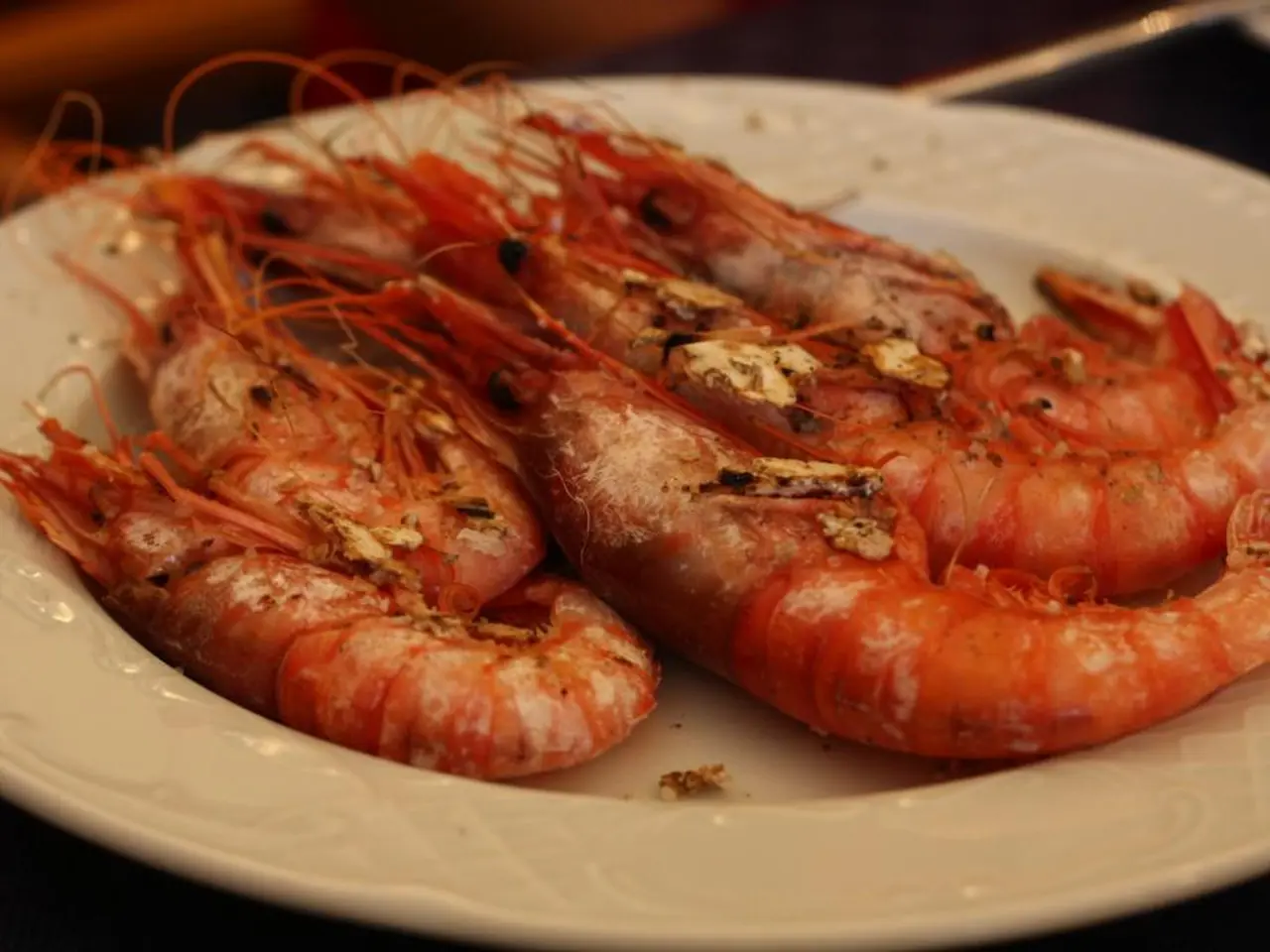
The National Institute of Health, EPA, and FDA advise pregnant women to consume 8 to 12 ounces (approximately 2 to 3 palm-sized servings) per week of low-mercury seafood as part of a healthy diet during pregnancy. Shrimp is considered safe because it has low mercury content, but it should be fully cooked to avoid any risk of foodborne illness.
When it comes to seafood, it's essential to be aware of the potential contaminants. Pregnant women should check for advisories before eating fish they have caught themselves, as other contaminants, such as polychlorinated biphenyls (PCBs), may also be present in fish, and their levels vary by location and fish species.
Seafood that manufacturers have smoked and refrigerated may contain Listeria, a bacteria that can pose a risk to pregnant women. Pregnant women should avoid smoked seafood unless it has been cooked to an internal temperature of 165°F (about 73.89°C) to minimize the risk of Listeria contamination.
Omega-3 fatty acids, including DHA and EPA, are key nutrients in shrimp that support a child's brain development. Consuming omega-3 fatty acids from food sources like shrimp may improve pregnancy outcomes.
Fish can also be a good source of vitamin D, vitamin B12, and selenium. However, pregnant women should be careful with foods containing seafood and ensure they are cooked thoroughly to the recommended internal temperature to minimize the risk of contamination.
It's important to note that some fish should be avoided due to their higher mercury content. These include tilefish from the Gulf of Mexico, bigeye tuna, marlin, king mackerel, swordfish, shark, swordfish, and orange roughy.
In summary, pregnant women should consume 8 to 12 ounces weekly of low-mercury seafood, divided into 2-3 servings. Shrimp, being low in mercury, is safe to eat during pregnancy. The serving size of low-mercury seafood for pregnant or lactating people is approximately the size of the palm of the hand. This approach helps provide essential nutrients from seafood while minimizing mercury exposure risks during pregnancy.
- To ensure the safety of the baby, pregnant women are advised to consume low-mercury seafood as part of a healthy diet, following guidelines from the National Institute of Health, EPA, and FDA.
- Pregnant women should be cautious about their seafood choices, especially when it comes to fish caught personally, as contaminants like PCBs may occur in different locations and fish species.
- Although shrimp is safe to eat during pregnancy due to its low mercury content, it should be fully cooked to avoid any risk of foodborne illness associated with undercooking.
- Pregnant women should avoid smoked seafood that hasn't been cooked to an internal temperature of 165°F, as it may contain harmful bacteria like Listeria.
- Consuming seafood like shrimp during pregnancy can supply essential nutrients like Omega-3 fatty acids, which support a child's brain development and may improve pregnancy outcomes.
- When pregnant, it's crucial to be aware of certain fish to avoid due to their higher mercury content, such as tilefish from the Gulf of Mexico, bigeye tuna, marlin, king mackerel, swordfish, shark, swordfish, and orange roughy, as their consumption can pose health risks.