
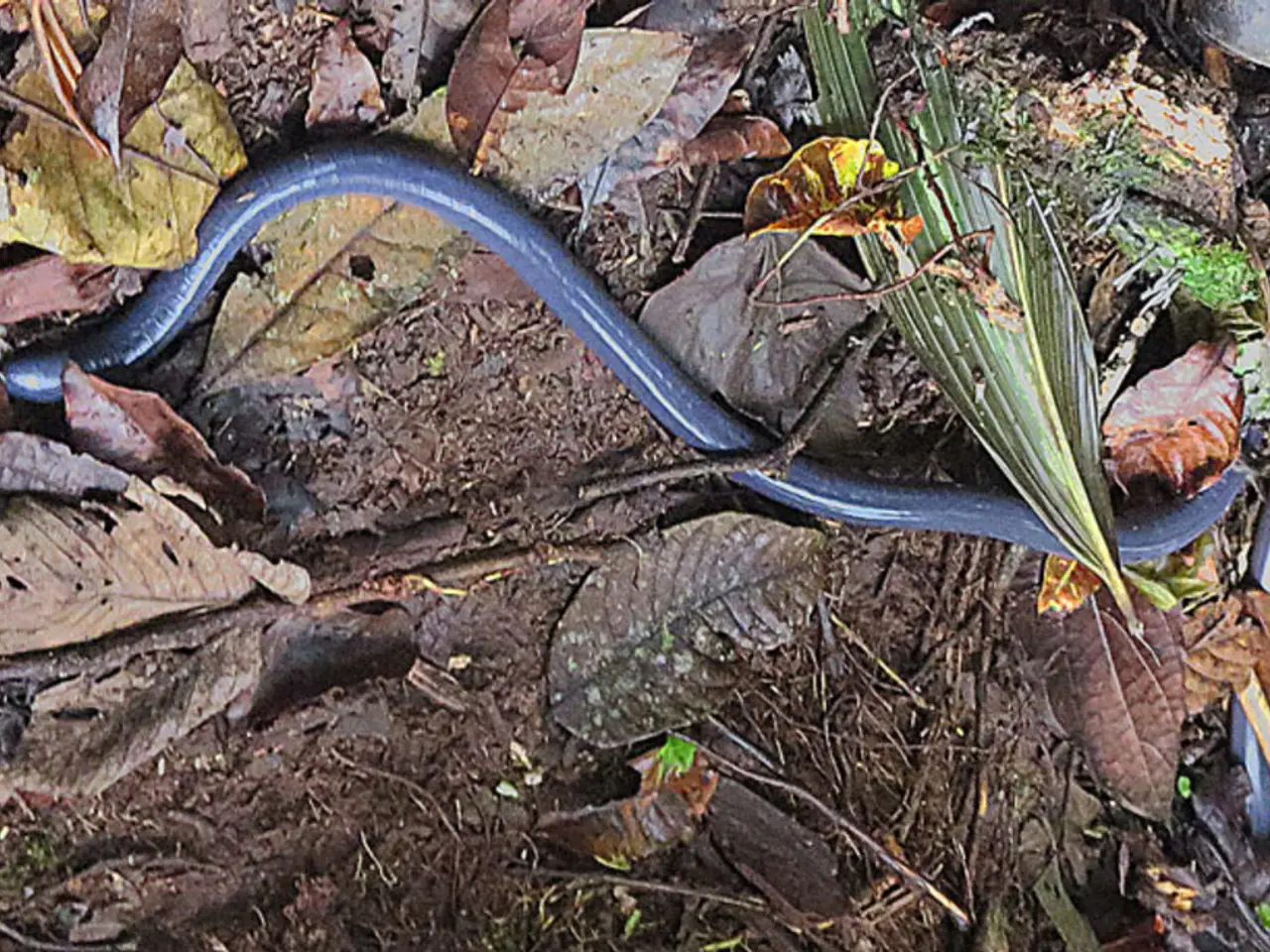
Rare Species Resurfaces in the Galapagos Islands After Being Declared Extinct
In the Galápagos Islands, a significant event unfolded in recent years - the rediscovery of the leaf-toed gecko (Phyllodactylus maresi) on Rábida Island. This tiny creature, measuring about eight centimeters, was known only through 5,000-year-old fossils until recent times[1][3].
The return of the leaf-toed gecko is closely tied to an initiative launched in 2011, aimed at restoring the natural balance of the fragile ecosystems on Rábida Island[2]. Led by Island Conservation along with partners such as the Galápagos National Park and Charles Darwin Foundation, the project involved a large-scale operation to eliminate invasive brown rats using helicopters to distribute poisoned bait - the first of its kind in South America[1][3]. By 2012, the rat population had been eradicated from Rábida Island[2].
The success of this restoration project allowed native species like the leaf-toed gecko to recover and repopulate relatively quickly. Geckos were documented within a year of the eradication completion, highlighting how ecosystem rebalancing enables natural recovery[1][3].
Further scientific expeditions in 2019 and 2021 confirmed the gecko’s live presence and genetic lineage on Rábida Island[2]. The rediscovery serves as a hopeful example of successful island restoration that can be a model for biodiversity recovery worldwide[1][2].
The unique genetic identity of the Rábida Island population adds importance to its conservation for the long-term survival of the species. Genetic analysis of the rediscovered geckos showed a genetic distinction from other populations of the species on different islands[2]. This genetic distinction emphasizes the need for targeted conservation efforts to preserve unique genetic lineages[1].
Tailoring conservation efforts to safeguard the unique evolutionary lineage of the species is crucial in cases like the leaf-toed gecko. Further research on the Phyllodactylus genus and additional sampling from other Galápagos islands is necessary to understand the full scope of the gecko's genetic variation[1].
The rediscovery and genetic analysis of the leaf-toed gecko underscore the importance of conservation interventions in delicate environments like the Galápagos. The Galápagos Islands, known for their unique biodiversity, have faced challenges from invasive species. However, initiatives like the one on Rábida Island provide a beacon of hope for the preservation of these fragile ecosystems[1].
A recent study published in PLOS ONE provides detailed insights into the gecko’s return, emphasizing the importance of these conservation efforts[1][2]. The study underscores the potential for successful conservation outcomes when invasive species are removed and native species are given a chance to recover[1].
References:
[1] Island Conservation. (n.d.). Leaf-toed Gecko (Phyllodactylus maresi) Rediscovered on Rábida Island, Galápagos. Retrieved from https://www.islandconservation.org/news/leaf-toed-gecko-phyllodactylus-maresi-rediscovered-on-rabida-island-galapagos
[2] Kohn, J. A., Bustamante, P., & Pardo, J. (2021). Reintroduction of the Endemic Leaf-toed Gecko (Phyllodactylus maresi) to Rábida Island, Galápagos, Ecuador, and the Importance of Genetic Monitoring in Conservation. PLOS ONE, 16(11), e0260258. https://doi.org/10.1371/journal.pone.0260258
[3] Lozano, J. (2012). Gecko rediscovered on Galapagos island. BBC News. Retrieved from https://www.bbc.com/news/science-environment-20420221
The conservation efforts on Rábida Island, focusing on eliminating invasive species and restoring ecosystem balance, not only led to the return of the leaf-toed gecko but also various health-and-wellness benefits for other native species. The unique genetic lineage of the rediscovered geckos in environmental-science is crucial for its long-term mental-health and overall survival, highlighting the importance of space-and-astronomy-related conservation interventions in preserving the diverse biodiversity of the Galápagos Islands.