
Rarity of Alpha Males Amongst Similar Primate Species, According to Scientists' Research Findings
In a groundbreaking study published in the Proceedings of the National Academy of Sciences (PNAS), researchers have delved into the complexities of gender hierarchies within various primate species, offering valuable insights into social dominance and health. The study, which spanned over five years and involved data collection from 253 primate populations across 121 different species, has challenged the binary view of primate dominance that has long been held.
The research, which focused on interactions between male and female primates, revealed that these encounters often involved aggression, threats, and signs of dominant or submissive behaviour. Surprisingly, confrontations between members of the opposite sex were more frequent than previously thought, with more than half of these interactions within a group involving a male and a female.
The results of the study suggest that primates exhibit a wide range of dominance patterns, with neither males nor females always holding the top position. In fact, for 70% of the primates, either males or females could be at the top of the pecking order. Clear female domination was recorded in 13% of the populations, while male domination was more common among ground-bound species and usually more pronounced in species where males have a clear physical advantage.
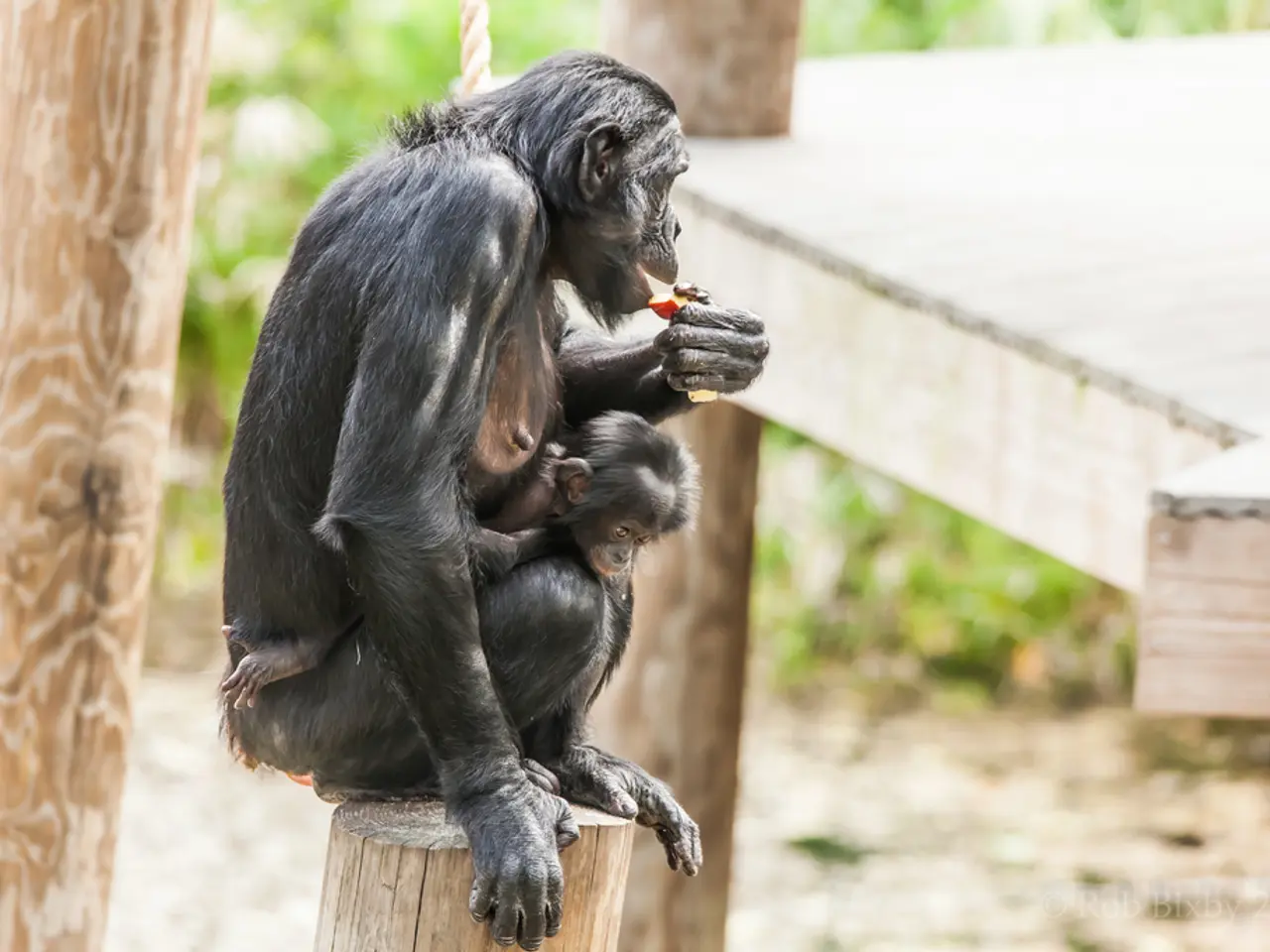
Interestingly, in species where females are solitary or only live in male-female pairs, monogamy is closely linked to female dominance. This is because females tend to dominate over societies when they exert control over reproduction. For instance, in bonobos, the sexual swelling is less obvious, allowing females to mate more freely. On the other hand, in female baboons, their genitals swell during ovulation, causing males to jealously guard them during this period.
The study also found that male dominance can come with trade-offs, such as energetic costs from mate-guarding and higher stress hormone levels, which can suppress immune function. This is similar to the case of high-ranking males in baboons, who experience these trade-offs due to the energetic costs of mate-guarding.
While the findings of this study provide important parallels to human societies, it's crucial to approach any direct application to humans with caution. The underlying biological mechanisms, such as stress and immune function modulation by social status, are relevant to humans but operate within a broader and more flexible social context. Human social hierarchies are influenced by cultural norms, institutions, gender equality movements, and complex social identities that the primate models do not fully capture.
The study does not explicitly state whether the results can be directly extrapolated to our own species. However, the findings offer a fascinating look into the complexities of social dominance within primate species and highlight the need for further research into human social structures and their impact on health and wellbeing.
References: [1] Sapolsky, R. M. (1990). Stress, glucocorticoids, and the immune system: an evolutionary perspective. Physiological reviews, 70(2), 403-429. [2] Silk, J. B., & House, C. (1994). Social networks and social behaviour in rhesus macaques. In Nonhuman primates as models for human social behaviour (pp. 13-31). Cambridge University Press. [3] Wrangham, R. W. (1980). Chimpanzees: the politics of power. Scientific American, 243(3), 94-102.
In light of the study's findings, it might be intriguing to explore the role of mental health and wellness in relation to dominance patterns within primate species, considering the potential impacts of stress hormones on immune function observed in high-ranking males. Furthermore, the study's insights on social dominance could potentially inspire investigations into the connection between health-and-wellness and gender hierarchies in France and other human societies, although direct applications should be approached with caution due to the unique cultural, institutional, and social factors that greatly influence human societies.