
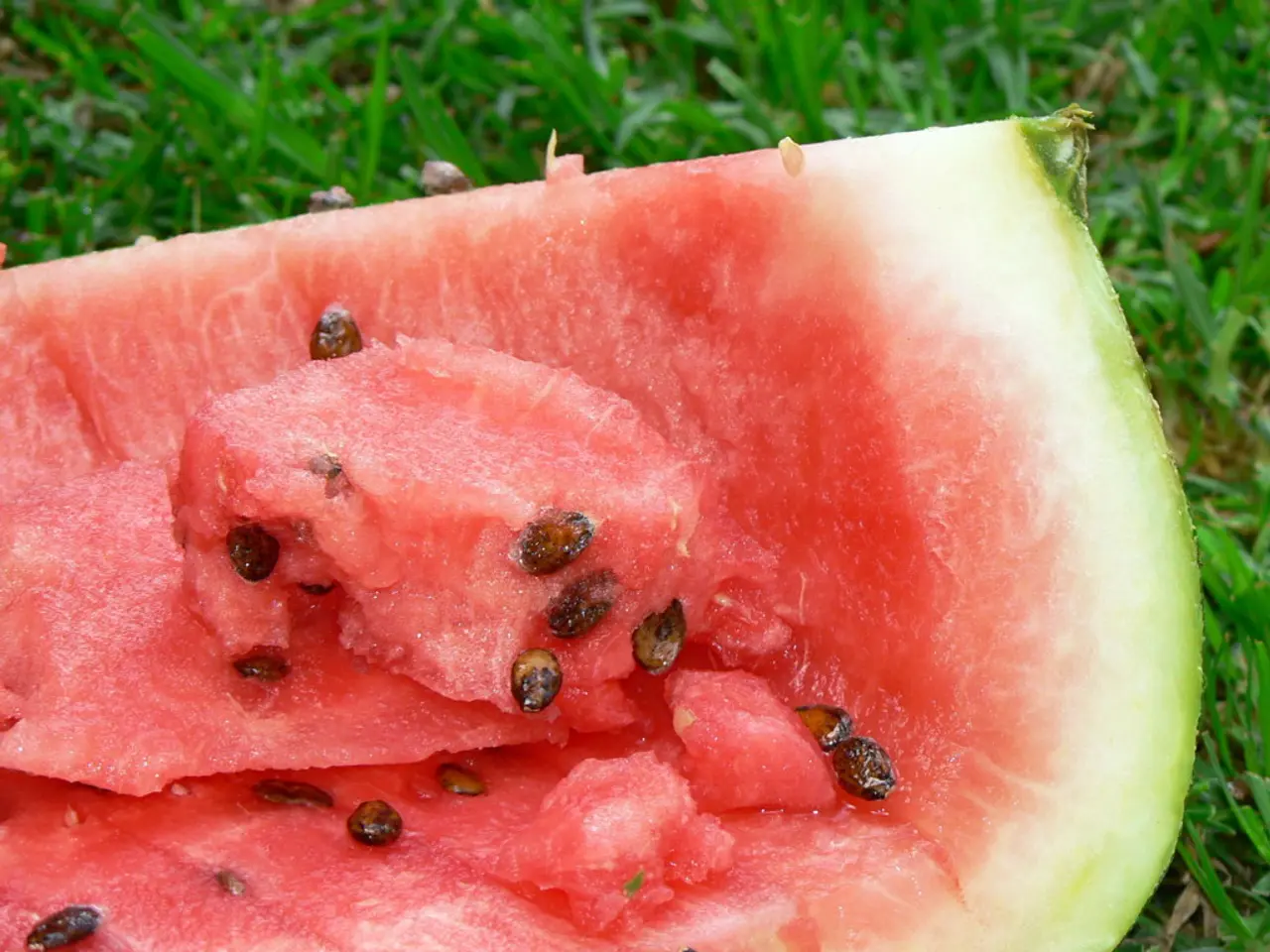
Unhealthy Risks of Consuming Immature Watermelons
In the heart of Russia, watermelons are a summer staple, traditionally appearing in late July to early August. However, with the advent of intensive cultivation methods, early watermelons are now available, but at a cost. Economist Dmitry Morkovkin, from the Financial University under the Government of the Russian Federation, has expressed concerns about the overpayment for these off-season products not justifying their quality and safety.
The use of nitrates, pesticides, and other chemicals in the intensive cultivation of early watermelons poses a potential risk to consumers' health. One of the primary concerns is the increased nitrate content in these watermelons due to the use of nitrate-based fertilizers. Excessive nitrate consumption can lead to acute food poisoning, with symptoms including nausea, vomiting, abdominal pain, diarrhea, and in severe cases, respiratory distress and convulsions.
Moreover, early season watermelons might contain chemical residues from growth stimulants and fertilizers, which have not had time to decompose. These residues can be harmful to human health, especially for vulnerable populations like children and the elderly.
Watermelons, like other fruits that grow in contact with the ground, can accumulate bacteria such as salmonella, listeria, or E. coli. These pathogens can be transferred from the skin to the edible parts during handling and cutting, especially if the fruits are not properly washed.
However, it's not just the early watermelons that pose a health risk. Even when grown safely, excessive consumption of watermelon can cause digestive issues due to its high water and natural sugar content. Individuals with prediabetes or diabetes should be cautious of the high glycemic index of watermelon, as it can lead to blood sugar spikes.
Watermelon seeds, when consumed in excess, can lead to digestive issues and may increase the risk of kidney stones due to their oxalate content.
Despite these potential risks, modern logistics enables the enjoyment of watermelons all year round. In early spring, watermelons ripen in Iran, while in winter, they are imported from Brazil, Ecuador, and Costa Rica.
In conclusion, while the cost of early watermelons in Russia is higher due to their scarcity during this season, overpayment does not guarantee their quality and safety. Consumers are advised to be mindful of the potential health risks associated with these early season watermelons, particularly those grown using intensive cultivation methods, and to ensure that their fruits are properly handled to minimize exposure to pathogens and chemical residues.
In the realm of health-and-wellness discussions, there are concerns about the safety of early watermelons due to the intensive use of chemicals like nitrates, pesticides, and growth stimulants in their cultivation. This increase in chemical content might lead to acute food poisoning or harm, especially for vulnerable groups like children and the elderly.
Although watermelons can be enjoyed year-round thanks to modern logistics, it's essential to remember that even safely grown watermelons can pose risks, such as digestive issues due to high water and natural sugar content, particularly for those with prediabetes or diabetes. Moreover, watermelon seeds, if consumed excessively, could lead to digestive problems and a higher risk of kidney stones due to their oxalate content.
When it comes to lifestyle choices and food-and-drink selections, it's crucial for consumers to be informed about the potential health risks associated with certain foods, such as early season watermelons grown using intensive cultivation methods. Proper handling and careful consideration of individual dietary needs can help minimize these risks and ensure a healthy and enjoyable culinary experience.