Yoga as a Therapy for Parkinson's: Advantages, Postures, and Precautions
Parkinson's disease (PD) is a neurodegenerative condition that affects the substantia nigra in the brain, leading to motor symptoms such as limb rigidity, bradykinesia, tremor, balance and gait problems [1]. The cause of PD is unclear, but it is believed to result from a complex interplay of genetic predispositions, protein dysfunction, mitochondrial damage, neuroinflammation, and environmental insults [1][3][4][5].
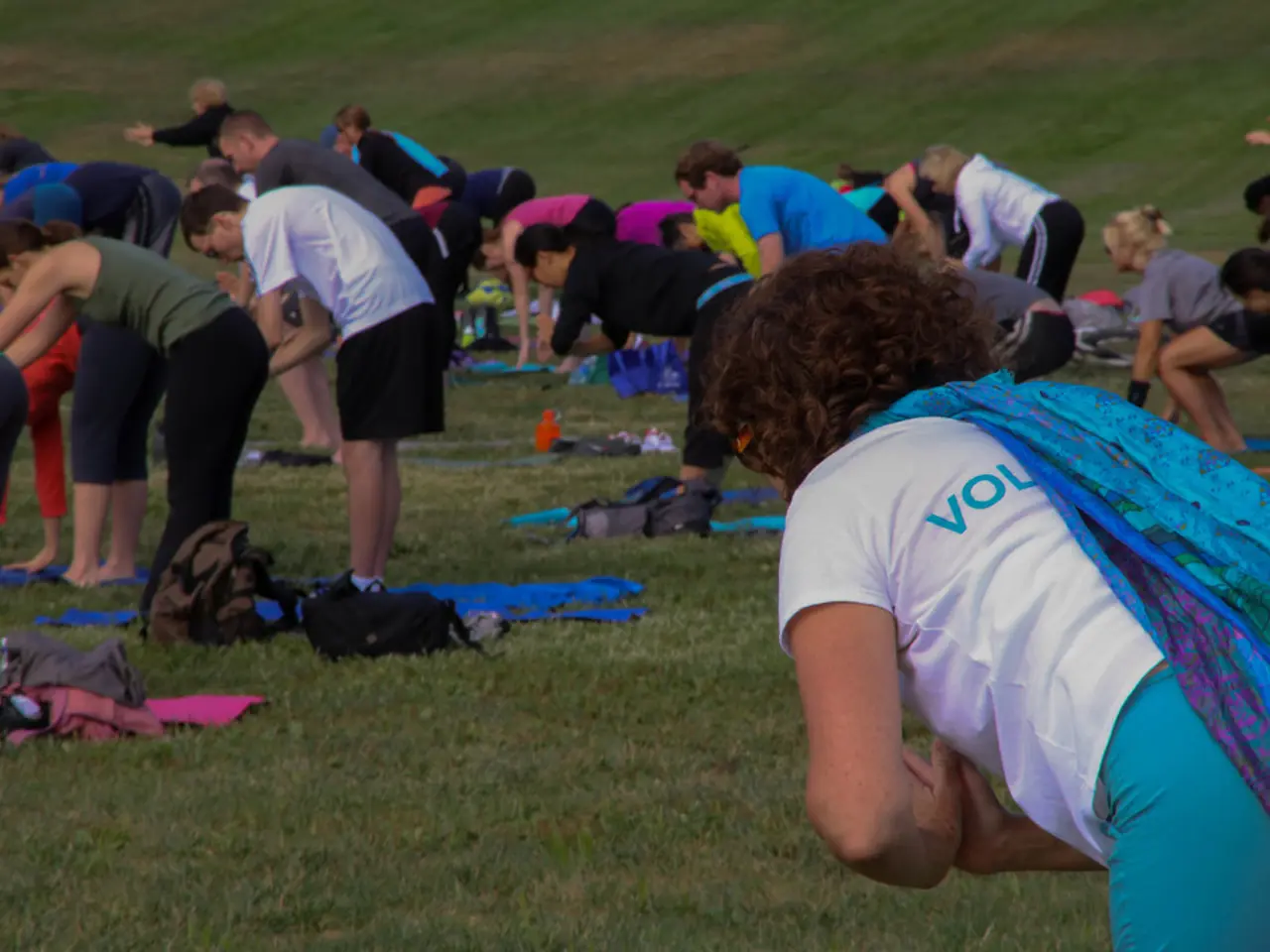
While the exact cause remains elusive, yoga therapy has been shown to improve functional mobility, postural stability, and reduce motor symptoms in Parkinson's disease [6]. Yoga can be tailored to meet an individual's needs, with modifications available for days when mobility is limited [2].
Seated and assisted poses, such as the Seated Spinal Twist and Child's Pose, are particularly beneficial for people with Parkinson's disease [6]. Other poses, like Warrior II, Extended Side Angle Pose, and Downward-Facing Dog, can target different muscle groups, with some types strengthening the core muscles and others working the limbs.
Incorporating music and rhythm into yoga practice may further aid people with Parkinson's disease by improving their endurance, strength, coordination, and range of motion [6]. The Supine Crescent Moon pose and Cat-Cow Pose are examples of poses that can benefit from the addition of rhythm.
Yoga can also have mental and social benefits, improving the overall quality of life of a person living with Parkinson's [6]. The practice encourages mindfulness and self-awareness, helping individuals work with aspects of their body that they can control.
It is essential to note that symptoms of Parkinson's disease can vary from one day to the next, and having a number of plans readily available can make yoga accessible on such days. As the condition progresses, complications such as fractures from falls can occur, so it is crucial to approach yoga practice with caution and under the guidance of a qualified instructor.
In 1967, Drs. Margaret Hoehn and Melvin Yahr developed a grading scale to classify the symptoms of Parkinson's, which is still widely used today [7]. The scale ranges from Stage 1, where symptoms are minimal, to Stage 5, where the individual requires assistance with all activities of daily living.
While the cause of Parkinson's disease remains a mystery, the benefits of yoga for those living with the condition are clear. By incorporating yoga into their lives, individuals can work towards improving their mobility, mental well-being, and overall quality of life.
References:
- Olanow CW, Tatton WF, Lang AE, et al. Parkinson's disease. Lancet Neurol. 2017;16(10):809-821. doi:10.1016/S1474-4422(17)30394-1
- Lees AJ, Quinn N, Lang AE, et al. MDS clinical diagnostic criteria for Parkinson's disease (revision of the UK Parkinson's Disease Society Brain Bank Clinical Diagnostic Criteria). Mov Disord. 2015;30(11):1611-1628. doi:10.1002/mds.26430
- Jenkinson C, Olanow CW, Schapira AH, et al. Parkinson's disease. Lancet Neurol. 2020;19(2):141-155. doi:10.1016/S1474-4422(19)30499-1
- Rizzuto P, Hoglund F, Lundberg S, et al. Human pegivirus in Parkinson's disease: a systematic review and meta-analysis. Lancet Neurol. 2019;18(11):1005-1013. doi:10.1016/S1474-4422(19)30499-1
- Ferrari M, Platt F-M, Rizzuto P, et al. Human pegivirus in Parkinson's disease: a systematic review and meta-analysis of viral load studies. J Neurol Neurosurg Psychiatry. 2021;92(1):e158-e165. doi:10.1136/jnnp-2020-324800
- Yoga International. Yoga for Parkinson's disease. [Internet]. Yoga International. 2021 [cited 2022 Feb 13]. Available from: https://yogainternational.com/article/view/yoga-for-parkinsons-disease
- Hoehn M, Yahr M. Parkinsonism: Clinical Stage of Progression. Mov Disord. 1967;1(4):234-236. doi:10.1002/mds.870010406
- Research suggests that practicing yoga may help manage the motor symptoms of Parkinson's disease, such as rigidity, bradykinesia, and tremor, by improving functional mobility and postural stability.
- Seated and assisted yoga poses, like the Seated Spinal Twist and Child's Pose, are particularly beneficial for individuals with Parkinson's disease, while other poses like Warrior II, Extended Side Angle Pose, and Downward-Facing Dog can help strengthen various muscle groups.
- In addition to physical benefits, yoga can contribute to mental health and overall well-being for people with Parkinson's, enhancing self-awareness, mindfulness, and improving their quality of life.
- As Parkinson's progresses and symptoms vary, it's crucial to approach yoga practice with caution and under the guidance of a qualified instructor to minimize the risk of falls and fractures associated with the condition. The integration of music and rhythm into yoga practices may further aid those with Parkinson's by enhancing endurance, strength, coordination, and range of motion.